

These days, when someone says they want to start a podcast, there can be some ambiguity. Podcasting has evolved far beyond its roots as an audio streaming format. What started as conversations modeled after radio is now a multimedia ecosystem that includes full video productions, short-form clips, and live streams.
Content marketing strategy is about creating the right mix rather than a one-format decision. Still, leaders are faced with an important question: at this stage in the company’s growth, is it best to focus on an audio podcast, a video podcast, or both?
The answer depends on your goals, audience, resources, and how you plan to use your content. Let’s break down the pros and cons of each format and help you decide which is best for your business.
Reasons to Start an Audio-Only Podcast Compared to a YouTube Video Podcast
1. Lower Startup and Ongoing Costs
Audio-only podcasts are far more affordable to launch and maintain. A quality microphone, basic recording software, and light editing are enough to produce a professional show. There is no need for cameras, lighting, studio space, or advanced video editing. The creator’s talent for expressing themselves alone pulls most of the weight.
For small businesses and solo founders, this lower financial barrier makes audio podcasting an accessible long-term strategy.
2. Faster and Simpler Production Workflow
Recording audio requires less setup and post-production time than video. Audiences are used to audio programs that are live, unscripted, and unrehearsed, while they’re accustomed to more editing and polish in videos.
This allows businesses to publish more consistently, which is critical for audience growth. Fewer technical hurdles also mean less dependence on specialized staff or external production teams.
3. Easier for Audiences to Consume
Audio podcasts fit seamlessly into daily routines. Listeners can tune in while driving, exercising, cleaning, or working. Since audio does not require visual attention, completion rates are often higher than video, especially for long-form content. Grabbing people’s attention on social media gets more competitive by the day, but occupied people aren’t focused on scrolling to the next piece of content.
Ease of consumption is an even bigger plus for business-oriented podcasts or special-interest topics. The reality is that most people find it challenging to find time for learning that leads to self-improvement.
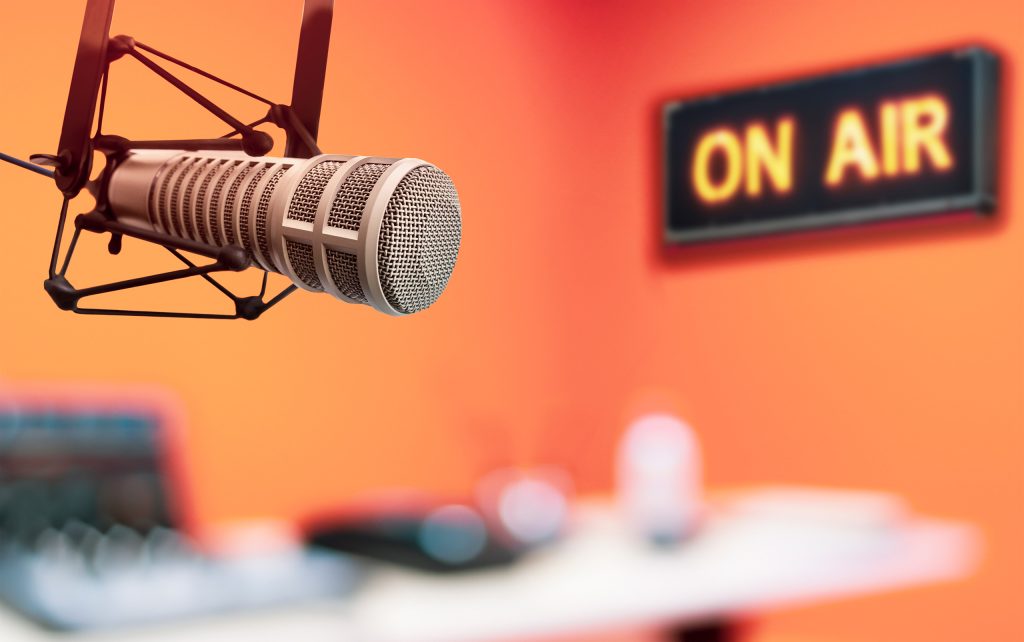
4. Stronger Sense of Intimacy and Trust
Audio-only content often feels more personal. Without visual distractions, listeners focus on tone, ideas, and storytelling. This makes audio podcasts especially effective for thought leadership, education, and relationship-driven businesses.
If you want your potential customer to feel like they know you before they’ve even met you, this is one of the few ways to pull it off.
5. Less Pressure on Hosts and Guests
Many experts are more comfortable speaking without a camera. Audio podcasts remove concerns about appearance, body language, and on-camera performance, making it easier to maintain a natural conversational tone.
If you plan to feature guests regularly, you may find it easier to get them on board with an audio-only podcast.
6. Ideal for Long-Form, In-Depth Discussions
Audio podcasts excel at deep dives. Without having to consider visual engagement, hosts can explore complex topics at length. This format works well for niche industries, technical subjects, and high-level business insights.
This benefit synergizes perfectly with the fact that listeners can be doing something else while consuming the content, making the time investment feasible for them.
7. Easier to Sustain Long-Term
Building an audience is a marathon. Because audio podcasts require fewer resources and less preparation, they are often easier to maintain over months or years. Sustainability is one of the most overlooked success factors in podcasting, and audio-only formats have a clear advantage here.
When an idea is new and exciting, it’s easy to overcommit. Luckily, with an audio podcast, you have a good shot at getting through the hump.
Cons of Audio-Only Podcasts
Limited visual branding
Audio offers fewer opportunities to showcase logos, environments, or visual identity, which can slow brand recognition.
Weaker social media repurposing
While audiograms and quote graphics help, they rarely perform as well as native video clips.
Lower discoverability
Audio platforms rely heavily on existing subscribers and word-of-mouth, making organic discovery more challenging than on YouTube and social media apps.

Reasons to Start a YouTube Video Podcast Compared to an Audio-Only Podcast
1. Greater Brand Visibility and Recognition
At the end of the day, we’re visual creatures. Video podcasts allow audiences to see your face, expressions, workspace, and overall brand aesthetic. This visual exposure accelerates familiarity and strengthens brand recall, which is especially valuable for businesses selling high-trust products or services.
You won’t be wrestling with the limitations of an all-audio podcast, and the creative possibilities are endless.
2. Stronger Discoverability Through YouTube Search
YouTube functions as both a social platform and a search engine. Video podcasts can appear in search results, suggested videos, and recommended feeds, often reaching new audiences faster than audio-only shows.
Promoting your videos requires more consistent effort than beginning podcasters often realize. With discoverability on your side, building your audience feels attainable rather than a mountain to climb.
3. Powerful Content Repurposing Opportunities
One YouTube podcast episode can be chopped up into short clips for LinkedIn, Instagram, TikTok, and other platforms. This makes video podcasts a cornerstone content asset that fuels a broader marketing ecosystem.
While you can grab highlights from audio podcasts and add visuals to them for social media, they’re unlikely to get as much attention as video clips.
4. Higher Perceived Authority and Credibility
Seeing hosts and guests on camera increases trust. For B2B brands, consultants, and educators, video can reinforce expertise and professionalism more effectively than audio alone.
Putting your name and face out there rather than relying on logos and strategies to promote your business name is seen as an admirable move worthy of respect.
5. Stronger Engagement Signals
Comments, likes, and visual feedback allow audiences to engage more actively with video podcasts. This interaction helps creators refine messaging and build community faster.
Social media apps interpret high engagement as a signal of high-quality content. Platforms are more likely to grant these posts greater reach, creating opportunities to broaden your exposure.

6. Better Alignment with Modern Content Consumption Trends
Many audiences, particularly younger and social-first users, increasingly prefer video. A YouTube podcast aligns naturally with current content habits and platform algorithms.
Video podcasts have essentially become the standard, and as time marches on, this trend will likely continue, making audio podcasts more of a niche category.
7. Additional Monetization and Growth Options
Video podcasts open additional monetization paths, including YouTube advertising, sponsorship integrations, and visual product placements. These options are more limited in audio-only formats.
Many marketing leaders use social media primarily for brand building. However, video leaves the door open to change if your business pivots.
Cons of YouTube Video Podcasts
Higher production costs
Cameras, lighting, editing software, and potentially studio space increase both startup and ongoing expenses.
Longer production timelines
Video editing is time-consuming and requires specialized skills to do well, which can slow publishing schedules.
On-camera pressure
Not all hosts or guests are comfortable being filmed, which can affect performance and guest availability.

Audio vs Video Podcast: Key Differences for Business
| Factor | Audio Podcast | Video Podcast |
| Production Cost | Low | Medium to High |
| Time Investment | Minimal | Significant |
| Audience Behavior | Passive listening | Active viewing |
| Discoverability | Moderate | High |
| Repurposing Potential | Limited | Extensive |
| Branding Opportunities | Subtle | Strong |
Which Format Is Best for Your Business?
To summarize, let’s take a quick look at the top reasons to choose an audio podcast or a video podcast.
Choose an Audio Podcast If:
- You have a limited budget or staff
- Your audience prefers long-form, in-depth conversations
- You want to build trust and thought leadership
- You need a sustainable, low-friction content strategy
Choose a Video Podcast If:
- Brand visibility and awareness are top priorities
- Your audience spends time on YouTube or social media
- You want to maximize content repurposing
- You’re comfortable investing in production quality

The Hybrid Approach: Best of Both Worlds
Not sure which direction to take? Many businesses now record video podcasts but distribute them as both video and audio. This hybrid model offers:
- Audio distribution to podcast platforms
- Video distribution on YouTube and websites
- Short-form clips for social media
While this approach requires more upfront effort, it delivers the greatest long-term return by meeting audiences wherever they prefer to consume content.
Final Thoughts
There’s no one-size-fits-all solution. An audio-only podcast is often best for businesses prioritizing efficiency, intimacy, and long-term sustainability. A YouTube video podcast is better suited for brands focused on visibility, discoverability, and multi-platform content marketing.
Making the right choice goes beyond following trends. It’s about selecting the format that aligns with your business goals, audience preferences, and resources. Additionally, for many, the content that can be executed consistently over time is the best content.
Looking for advice custom-tailored for your business? Get in touch with the team at Nuflux Media today.
